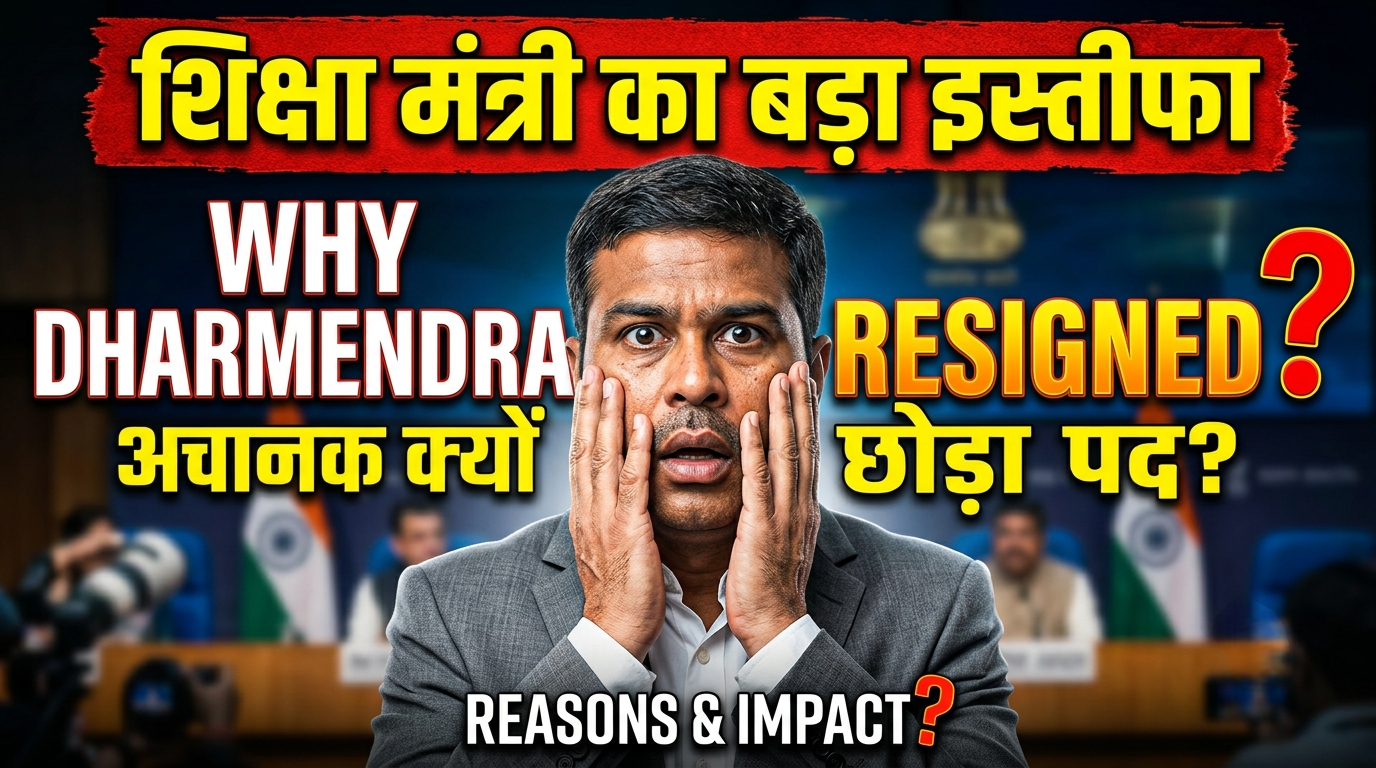
The resignation of Union Education Minister Dharmendra Pradhan has become one of the biggest political and education-related developments in India today. The announcement came after weeks of nationwide student protests over alleged examination irregularities, including the NEET paper leak controversy, drawing widespread public attention and political debate.
In this article, we explain what happened, why the resignation took place, and what it could mean for students and the education system.
What Happened?
On 25 July 2026, Union Education Minister Dharmendra Pradhan announced his resignation. According to multiple news reports, the decision followed sustained nationwide protests led by students and youth groups demanding accountability for alleged examination paper leaks and reforms in the education system.
The resignation came after weeks of demonstrations that placed significant public and political pressure on the government.
Why Did the Education Minister Resign?
Several factors contributed to the resignation.
1. Alleged Exam Paper Leak Controversy
The biggest issue was the controversy surrounding alleged leaks and irregularities in major entrance examinations, particularly NEET. Students across the country demanded greater transparency, accountability, and reforms in the examination process.
2. Nationwide Student Protests
Large-scale protests were organised in several parts of India. Student groups and youth-led movements called for action against those responsible for examination irregularities and sought changes to improve the education system.
3. Political Pressure
As the protests continued, pressure increased on the government to respond. The minister’s resignation was widely seen as a significant political development amid the growing public demand for accountability.
What Did Dharmendra Pradhan Say?
Following his resignation, Dharmendra Pradhan stated that he accepted moral responsibility and stepped down to prevent further disruption to students’ futures. He said the interests of students should remain the highest priority and emphasized his commitment to transparency and educational reforms.
Government’s Response
Following the resignation, reports indicate that the government has signaled its intention to continue discussions on education reforms and measures aimed at strengthening examination processes. Some protest groups also announced the suspension of their demonstrations after the resignation and subsequent assurances from the government.
What Does This Mean for Students?
Many students are now asking what happens next.
Possible developments include:
- Review of examination security systems
- Stronger anti-paper leak measures
- Possible reforms in examination administration
- Increased transparency in recruitment and entrance exams
At the time of writing, authorities have not announced a complete roadmap for all proposed reforms. Students should continue following official notifications from the relevant examination authorities.
Public Reaction
The resignation has generated widespread discussion across social media, educational communities, and political circles. While many students welcomed the move as a step toward accountability, others stressed that long-term reforms to the examination system are more important than leadership changes alone.
Frequently Asked Questions
Who resigned as India’s Education Minister?
Dharmendra Pradhan resigned as Union Education Minister on 25 July 2026.
Why did Dharmendra Pradhan resign?
According to multiple reports, the resignation followed weeks of nationwide protests over alleged examination paper leaks and broader concerns about the education system.
Was the NEET controversy linked to the resignation?
Yes. Reports identify the alleged NEET paper leak controversy as a major factor behind the protests that preceded the resignation.
What happens after the resignation?
The government is expected to appoint a new education minister and continue work on examination reforms. Further official announcements are awaited.
Read More: Click Here
Final Thoughts
The resignation of Union Education Minister Dharmendra Pradhan marks a significant moment in India’s education and political landscape. Triggered by widespread concerns over alleged examination irregularities and sustained student protests, the development has renewed focus on the need for transparent, secure, and trustworthy examination systems.
The coming weeks will be important as the government announces its next steps, including leadership changes and any reforms aimed at restoring confidence among students, parents, and educational institutions.